


Satchell Moran Solicitors
10 Dryden Road
Wavertree Technology Park
Liverpool, L7 9PG
0151 268 8282
info@satchellmoransolicitors.com
Satchell Moran Solicitors
10 Dryden Road
Wavertree Technology Park
Liverpool, L7 9PG
0151 268 8282
info@satchellmoransolicitors.com




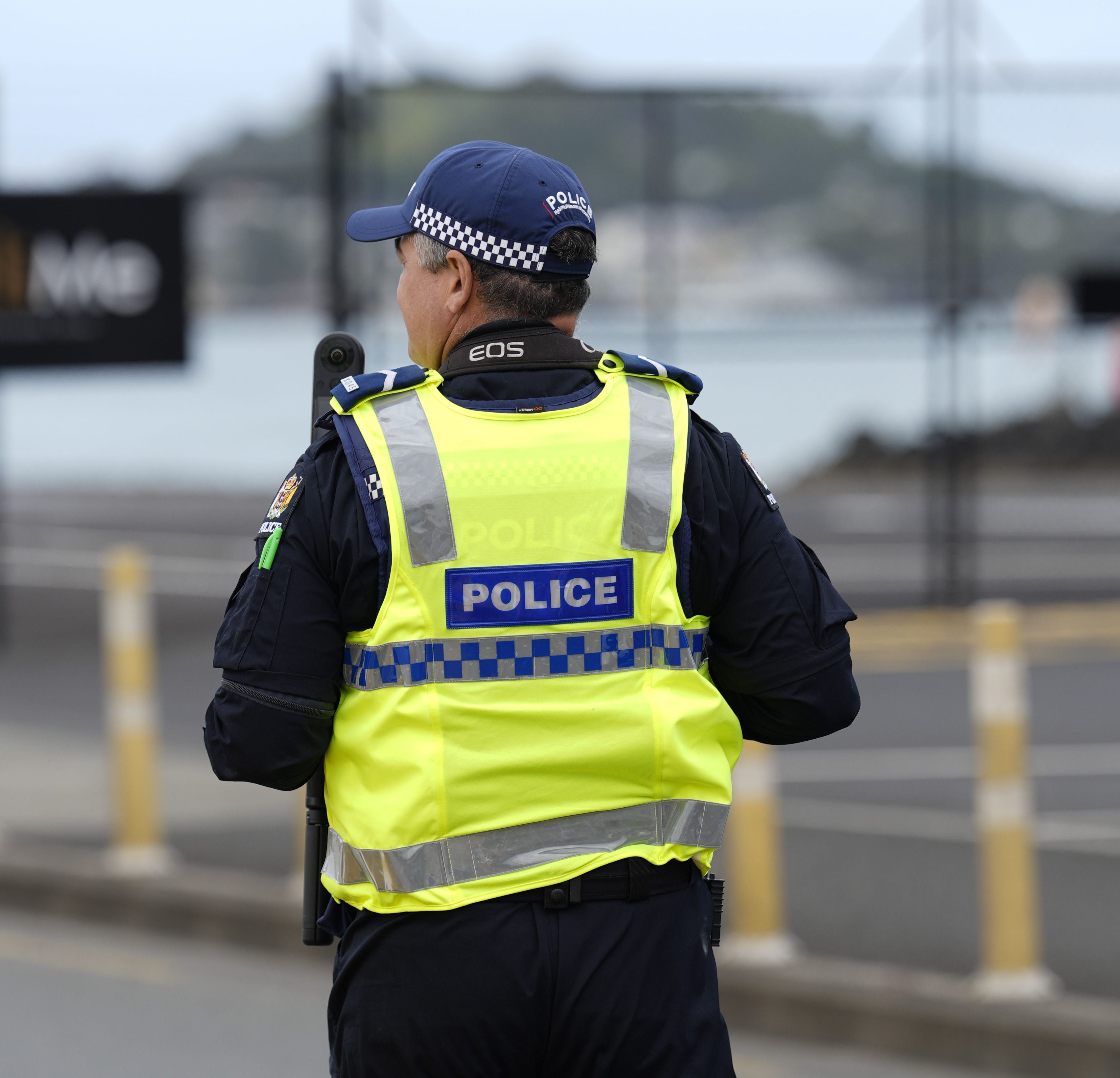
The police do not have to investigate every reported crime, and not every poor or incomplete investigation gives rise to a civil claim. However, where a police force has failed to investigate serious crime in a way that involved significant and obvious shortcomings, and where that failure caused you harm or violated your fundamental rights, you may have grounds for a civil claim. The law in this area changed substantially following two landmark Supreme Court decisions in 2018, and the position is more claimant-friendly than it was for much of the preceding three decades.
Claims against the police for failing to investigate a crime properly sit in a different legal space from most other civil claims against police forces. In a wrongful arrest or excessive force claim, the starting point is relatively straightforward: the officer did something to you that was unlawful. In a failure to investigate claim, the complaint is an omission, that the police failed to act adequately, and the law has historically been much more reluctant to impose liability for failures to act than for positive wrongdoing.
Understanding why that reluctance exists, and precisely where it has been qualified, is essential to assessing whether a claim is available.
The House of Lords’ decision in Hill v Chief Constable of West Yorkshire [1989] AC 53 significantly curtailed the ability of individuals to claim negligence against police forces for failure to prevent crime. The case arose from the investigation into the Yorkshire Ripper murders, and the House of Lords held that the police owed no general duty of care to individual members of the public in the prevention or investigation of crime. The reasoning was rooted in public policy: imposing a duty of care on the police in such contexts could lead to defensive policing and an unwelcome diversion of resources. caseminelegal500
For many years, Hill was read as conferring a broad immunity on police forces in respect of investigative failings. That reading proved to be too wide, and the Supreme Court eventually corrected it.
In Robinson v Chief Constable of West Yorkshire Police [2018] UKSC 4, the Supreme Court established that the police do not benefit from any special immunity from liability based on public policy. Their liability is to be determined by the application of ordinary principles of negligence. lawprof
The Supreme Court rejected the argument that police are entitled to special immunity from liability in negligence for actions performed during crime prevention or investigation. The Court held that liability should be determined according to the ordinary principles of the law of negligence, without special rules for public authorities. lawprof
The critical distinction that emerges from Robinson is between positive acts and omissions. The police can be liable for positive acts that cause foreseeable harm, but are generally not liable for omissions, such as failing to prevent a crime. Where the police themselves created a danger through their own positive conduct, ordinary negligence principles apply and a duty of care can arise. Where the complaint is purely that the police failed to act, the position remains more restricted. lawprof
This distinction matters enormously in practice. A claim that officers negligently caused harm through something they actively did is governed by ordinary negligence principles following Robinson. A claim that officers failed to investigate, failed to arrest, or failed to protect is governed by different considerations, and the common law alone will rarely provide a route to compensation without more.
The most significant development in failure to investigate claims came not from common law negligence but from the Human Rights Act 1998, and specifically from the Supreme Court’s decision in Commissioner of Police of the Metropolis v DSD and another [2018] UKSC 11.
DSD concerned an appeal by the Metropolitan Police Service from findings that its failures to investigate serious sexual assaults committed by John Worboys between 2003 and 2008 violated the Article 3 rights of two victims, and gave rise to liability in damages under sections 7 and 8 of the Human Rights Act 1998. crimeline
Article 3 of the European Convention on Human Rights imposes an operational duty on police officers to conduct proper investigations into allegations of ill-treatment. 3tg
The Supreme Court confirmed several critical principles in DSD that now form the foundation of failure to investigate claims:
The positive obligation to investigate allegations of ill-treatment effectively is not solely confined to cases where allegations have been made against state agents. Article 3 provides a positive duty upon the police to investigate crimes committed by non-state persons in order to ensure that individuals are protected against ill-treatment of the seriousness envisaged by Article 3. The public policy reasons which exempt the police from a common law duty of care do not extend to claims under the Human Rights Act 1998. lexology
Only obvious and significant shortcomings in investigations would ground a claim under Article 3. The threshold is not simply that an investigation was imperfect or that a different approach might have produced a better outcome. Something more is required: failings that are obvious, serious, and that fall well below the standard of an effective investigation. matrixlaw
The fact that other remedies, such as damages against the offender or a Criminal Injuries Compensation Authority award, might be available does not affect the entitlement to just satisfaction under the Human Rights Act. The purpose of such compensation is not principally to indemnify loss but to uphold minimum human rights standards and to vindicate rights. crimeline
Article 3 prohibits torture and inhuman or degrading treatment. The investigative obligation under Article 3 arises where the underlying crime was of sufficient severity that it falls within the scope of Article 3. DSD clearly treats rape and most sexual offences as inhuman and degrading treatment under Article 3. matrixlaw
Beyond sexual violence, Article 3 has been held to apply to serious physical assaults, torture, sustained domestic violence, and other conduct that crosses the threshold of severity. Not every criminal offence engages Article 3, and the nature and gravity of the underlying harm is the starting point for any assessment.
Where Article 3 is engaged, the investigative obligation requires the police to conduct an effective investigation. This does not guarantee any particular outcome, but it does require that the investigation be prompt, thorough, and capable of identifying and holding perpetrators accountable. Obvious and significant failings in achieving those objectives can constitute a breach.
Where the crime or threat involves a risk to life, Article 2 of the Convention, the right to life, may impose a separate and equally significant investigative obligation. Later cases such as Van Colle v Chief Constable of Hertfordshire established the Article 2 operational duty where police knew or ought to have known of a real and immediate risk to the life of an identified individual and failed to take reasonable steps to protect them. legal500
The Article 2 investigative obligation requires that where someone dies in circumstances potentially engaging state responsibility, including in circumstances where the state may have failed to prevent a foreseeable death, there must be an effective official investigation. In practice this most commonly arises in deaths in custody cases, fatal domestic violence cases where the police had prior warning, and cases where a person known to be at risk was not protected.
Where an Article 2 operational failure is established, damages under the Human Rights Act 1998 are available in addition to, or instead of, any compensation from the offender or through the Criminal Injuries Compensation scheme.
Following DSD, this is the area where failure to investigate claims are most clearly established. Where a police force received a report of rape, serious sexual assault, or sustained domestic abuse and the subsequent investigation involved obvious and significant shortcomings, such as failing to pursue obvious lines of enquiry, failing to preserve or obtain evidence, failing to interview key witnesses, or closing investigations prematurely without adequate justification, an Article 3 claim may arise.
Where a person reported a credible and specific threat to their safety, and the police failed to take reasonable operational steps to protect them despite knowing of a real and immediate risk, an Article 2 operational duty claim may arise. The threshold is demanding: the risk must have been real, immediate, and known to the police, and the failure to act must have been one that no reasonable police force would have made.
Where the investigative failures went beyond omissions and involved positive acts causing harm, for example seizing and then losing critical evidence, actively misleading a complainant about the progress of an investigation, or closing an investigation in bad faith, ordinary negligence principles or misfeasance in public office may also come into play alongside the Human Rights Act route.
The DSD principle is not limited to sexual offences. Any crime involving treatment that crosses the Article 3 severity threshold may give rise to an investigative obligation. Serious assaults, torture, and sustained violence against vulnerable individuals have all been found to engage Article 3 in the Strasbourg jurisprudence on which DSD was based.
This is the central question in any failure to investigate claim, and it requires careful assessment of the specific facts. The courts have not defined an exhaustive list, but the following types of failure have been found relevant in decided cases:
No single failing automatically crosses the threshold. The courts look at the totality of the investigation and assess whether, viewed overall, the shortcomings were obvious, significant, and incompatible with an effective investigation.
Just satisfaction under the Human Rights Act 1998 is the primary remedy in Article 2 and Article 3 failure to investigate claims. Damages are assessed by reference to the gravity of the breach, the impact on the claimant, and the need to uphold minimum human rights standards. They are assessed separately from any award against the offender and are not reduced because other remedies exist.
General damages for psychiatric harm may be recoverable where the investigative failure caused a recognised psychological condition, such as post-traumatic stress disorder or a depressive illness, that would not have developed had the investigation been conducted properly.
Special damages for quantifiable financial losses directly caused by the failure, including any costs attributable to the inadequacy of the investigation, may also be recoverable where they can be established on the evidence.
Human Rights Act claims must be brought within 1 year less 1 day from the date of the breach, with limited court discretion to extend in appropriate circumstances. In failure to investigate cases, identifying the date of the breach requires careful consideration since the failures may have occurred over a prolonged period. A solicitor will need to assess when the relevant breaches can be said to have crystallised and ensure that proceedings are issued or protective steps taken within the applicable period.
Where a common law negligence claim is also available, the standard limitation periods apply: 3 years for claims involving personal injury and 6 years for other claims. These are assessed from the date of damage.
If you believe the police conducted a seriously flawed investigation into a crime committed against you, the following steps are advisable:
Satchell Moran Solicitors handles civil claims arising from police failures to investigate across England and Wales on a no-win, no-fee basis, and, where clients meet the eligibility criteria, through legal aid. As a firm with dual Lexcel accreditation and over 30 specialist solicitors, we assess each case on its individual merits, advise honestly on whether the threshold for a claim is met, and pursue only those cases we genuinely believe can succeed. If the police failed you at a time when you needed their protection most, contact us for a free initial consultation.
Start your claimNot on its own. The fact that an investigation did not result in a prosecution or conviction does not by itself establish a claim. What is required is evidence of obvious and significant shortcomings in the way the investigation was conducted, assessed against the standard of an effective investigation rather than an ideal one.
Following the Supreme Court’s decision in DSD [2018] UKSC 11, serious sexual offences and sustained domestic violence are the clearest cases, since rape and most serious sexual offences have been found to engage Article 3 of the Convention. Serious physical violence and threats to life may also engage Article 3 or Article 2 depending on the circumstances.
Yes, where those errors amount to obvious and significant shortcomings rather than mere imperfections. A thorough but ultimately unsuccessful investigation does not give rise to a claim. An investigation riddled with obvious failures that a reasonable and effective investigation would not have made may do so.
Not necessarily. A failure to investigate claim is assessed by reference to the conduct of the investigation and its impact on the claimant, not by the ultimate outcome. If significant failures occurred that violated the claimant’s rights, a claim may still be available even if the offender was eventually convicted, particularly where the delay caused by the failures caused the claimant additional harm.
Yes. Civil claims under the Human Rights Act and criminal proceedings are entirely separate. A civil claim for breach of the investigative obligation can be pursued alongside, before, or after any criminal proceedings, subject to the applicable time limits.
A Criminal Injuries Compensation Authority award does not prevent you from bringing a Human Rights Act claim against the police for investigative failures. The Supreme Court in DSD confirmed that the existence of other remedies does not affect entitlement to just satisfaction under the Human Rights Act, since the purposes of the two schemes are different.
The failures must be obvious and significant, not merely arguable or marginal. A claim requires clear evidence that the investigation fell well below the standard of an effective investigation, not simply that it could have been done better. A specialist solicitor will assess the specific failures against the threshold established in DSD and advise honestly on whether the evidence supports a claim.