


Satchell Moran Solicitors
10 Dryden Road
Wavertree Technology Park
Liverpool, L7 9PG
0151 268 8282
info@satchellmoransolicitors.com
Satchell Moran Solicitors
10 Dryden Road
Wavertree Technology Park
Liverpool, L7 9PG
0151 268 8282
info@satchellmoransolicitors.com




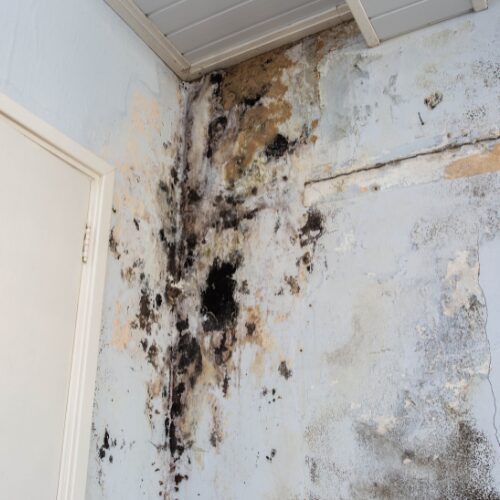
If you are a council or housing association tenant in London living with unresolved damp, mould, structural defects, or broken heating, you may have grounds for a housing disrepair claim. Social landlords in London, including some of the largest in the country, have faced sustained regulatory scrutiny for failing to maintain their properties to the standard required by law, and tenants have a legal route to pursue both repairs and compensation where that standard has not been met.
London is home to some of the largest registered social landlords in England, managing housing stock that ranges from Victorian terraces to post-war tower blocks, across a city where the pressure on social housing has rarely been greater. That scale brings operational challenges, but it does not reduce the legal obligations landlords owe to their tenants, and the regulatory record in recent years shows that those obligations have not always been met.
The Housing Ombudsman’s data for London and Quadrant Housing Trust, one of the largest housing associations in the country with a substantial presence across London, recorded 769 maladministration findings from 1,073 total findings, giving a maladministration rate of 71.7%. Individual cases investigated by the Ombudsman include a resident whose kitchen remained unrepaired some 21 months after he first made the landlord aware of a leak under the kitchen sink, with works still outstanding despite the landlord’s own commitments to remedy them. Housing OmbudsmanHousing Ombudsman
Camden Council has faced even more significant regulatory intervention. A special investigation by the Housing Ombudsman, published in November 2024, found a maladministration rate of 83% during 2023-24, with 124 findings of maladministration across 57 investigated complaints and 275 orders made to put things right for residents. The investigation identified a defensive complaints culture, with documents containing dismissive tones that run the risk of discouraging the acknowledgement of valid complaints. In one damp and mould case against Camden, the Ombudsman found the council had left a resident exposed to a potential category 1 hazard for over 2.7 years without taking necessary action, ordering over £2,000 in compensation for that period alone. Separately, Camden’s maladministration rate for repairs averaged 91% compared to 73% nationally during the period under investigation. BDC Magazine + 2
These are not isolated failings. They reflect systemic issues in how some of London’s largest social landlords manage repairs, respond to complaints, and treat their tenants. Where those failings have affected you directly, the law provides a route to hold them to account.
Regardless of the size of the landlord or the age of the housing stock, the legal obligations are the same across England and Wales. Under Section 11 of the Landlord and Tenant Act 1985, social landlords are required to keep in repair:
This obligation is implied into most assured and secure tenancies by statute. A landlord cannot contract out of it, and a tenancy agreement that attempts to place these responsibilities onto the tenant is unlikely to be enforceable. The obligation arises once the landlord has been given notice of the defect and a reasonable time to carry out the repair.
Where disrepair has caused personal injury or illness, Section 4 of the Defective Premises Act 1972 provides an additional basis for a claim. This provision imposes a duty of care on a landlord who has an obligation to repair and who knew, or ought reasonably to have known, of the defect in question. Crucially, a landlord cannot avoid this duty simply by ignoring reports or failing to inspect their properties.
London’s social housing stock includes a disproportionately high number of high-rise buildings, purpose-built estates, and older converted properties, each presenting characteristic repair challenges. The most common types of disrepair reported and pursued in claims include:
Not every defect gives rise to an actionable claim. The landlord must have been given reasonable notice of the problem and must have failed to act within a reasonable time. What constitutes a reasonable time will depend on the severity of the defect: a burst pipe causing active flooding demands an immediate response, while a slow-developing patch of damp may allow somewhat more time, though not indefinitely.
Before a formal legal claim, most tenants will have gone through their landlord’s internal complaints process, and in many cases this is required before a claim can be pursued through the courts. Most social landlords in London operate a two-stage complaints process, typically with a Stage 1 response within 10 working days and a Stage 2 response within 20 working days.
Where internal complaints have not resolved the matter, tenants can refer their case to the Housing Ombudsman Service. The Ombudsman can investigate individual complaints, order compensation, and require landlords to carry out repairs, and its findings can also be relevant evidence in a subsequent legal claim.
However, the Ombudsman process and a civil legal claim are separate routes. The Ombudsman’s compensation awards, while meaningful, are often lower than what can be recovered through a successful legal claim, and the Ombudsman cannot award compensation for personal injury. Tenants who have suffered ill health as a result of disrepair will generally need to pursue a legal claim to recover those losses.
Housing disrepair claims against London councils and housing associations follow the Housing Conditions Pre-Action Protocol, a structured process designed to encourage resolution without court proceedings where possible. The key stages are:
The protocol is designed to put pressure on landlords to engage seriously with a claim rather than simply repeating the internal complaints response. Where a landlord has already been found to have a history of systemic repair failures by the Housing Ombudsman, that regulatory context can be relevant background when assessing whether a landlord’s response to an individual complaint was reasonable.
You can read more about how the pre-action protocol works in our detailed guide on our housing disrepair claims page, and our housing repair breach claims guide explains the specific circumstances in which a breach of repairing obligations gives rise to a legal claim.
Compensation in a successful housing disrepair claim typically falls into two categories.
General damages compensate for loss of enjoyment of the property over the period the disrepair persisted, commonly assessed as a percentage reduction in rent reflecting how severely the conditions affected the use of the home. A single minor defect resolved promptly will be valued very differently to extensive mould affecting a bedroom used by a child over several years.
Special damages cover specific, quantifiable financial losses, such as:
Where personal injury has resulted from the disrepair, this is assessed separately by reference to the nature, severity, and duration of the illness or injury. Compensation will depend on the specific facts of each case, and a responsible solicitor will provide a realistic assessment based on the evidence rather than quoting a figure at the outset.
The strength of the evidence will have a direct bearing on how a claim progresses and what it is worth. Before instructing a solicitor, it helps to have gathered:
Tenants of large London landlords often find that repair logs are inconsistent, particularly where initial reports were made by phone. Keeping a written record of every contact, even informally, is worth doing from the moment a problem arises.
If you are a council or housing association tenant in London living with unresolved disrepair:
At Satchell Moran Solicitors, we act for council and housing association tenants across England and Wales, including London, in housing disrepair claims. We hold dual Lexcel accreditation and act on a no win, no fee basis, meaning there is no upfront cost to starting a claim and no fee if the claim is unsuccessful. Get in touch today for an initial enquiry at no cost and with no obligation to proceed.
Start your claimNo. Housing disrepair claims in London are governed by the same law that applies across England and Wales, and there is no requirement to instruct a solicitor based in the city. Many specialist housing disrepair firms, including Satchell Moran Solicitors, act for tenants across the country and handle London claims regularly.
Yes, provided you are a social housing tenant of that landlord, your disrepair falls within their repairing obligations, and they were given notice and a reasonable opportunity to act. The regulatory history of a landlord, including Ombudsman findings, is not a prerequisite for a claim but can be relevant context when assessing whether the landlord’s response was reasonable.
Going through the Housing Ombudsman does not prevent you from also pursuing a civil legal claim, and the two routes are not mutually exclusive. An Ombudsman finding of maladministration can be useful supporting evidence, but the compensation available through a civil claim, particularly where personal injury is involved, is generally higher than what the Ombudsman can award.
Condensation is a defence commonly raised by social landlords in London, particularly in high-rise or flat-roofed properties. Whether it succeeds depends on whether the property was provided with adequate insulation and ventilation in the first place. An independent surveyor’s report, obtained during the pre-action protocol process, will address the cause of the problem directly.
The general limitation period for housing disrepair claims is six years from the date the disrepair arose, under the Limitation Act 1980. Personal injury elements of a claim carry a shorter three-year period. You should seek advice promptly, as evidence becomes harder to gather over time, but long-standing disrepair is not automatically time-barred.
Landlords cannot lawfully evict a tenant in retaliation for pursuing a legitimate disrepair complaint. Retaliatory eviction is restricted under housing law, and a specialist solicitor can advise on your specific position. Pursuing a claim while remaining in your property is both possible and common.
Repairs being carried out after a claim is initiated do not extinguish the claim for the period during which the disrepair existed. Compensation for loss of enjoyment and any losses already incurred remains recoverable even where the landlord acts once legal proceedings begin.