


Satchell Moran Solicitors
10 Dryden Road
Wavertree Technology Park
Liverpool, L7 9PG
0151 268 8282
info@satchellmoransolicitors.com
Satchell Moran Solicitors
10 Dryden Road
Wavertree Technology Park
Liverpool, L7 9PG
0151 268 8282
info@satchellmoransolicitors.com




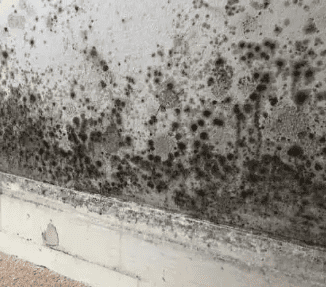
A no win no fee housing disrepair claim, formally known as a conditional fee agreement, means you only pay your solicitor’s fees if your claim succeeds. If the claim is unsuccessful, you typically owe nothing for the legal work carried out, and any risk is largely absorbed by the solicitor rather than the claimant.
A no win no fee arrangement is properly called a conditional fee agreement, or CFA. It is a contract between you and your solicitor that sets out how and when fees become payable.
Under a CFA:
This is different from “free legal advice.” A CFA is a funding mechanism, not a guarantee that legal work costs nothing in every circumstance. Most reputable housing disrepair solicitors will explain precisely what you would and would not be liable for before you sign anything.
When you instruct a housing disrepair solicitor on a no win no fee basis, the agreement typically covers several key elements.
If your claim succeeds, your solicitor may charge a success fee on top of their normal costs. This is usually expressed as a percentage of their base fees, capped by law in many types of claim. The exact percentage will be set out clearly in your CFA before you commit, and a properly regulated solicitor will not spring this on you after the event.
If a claim is unsuccessful, the central protection of a CFA is that you are not required to pay your own solicitor’s fees for the time they spent on your case. However, “no win no fee” does not automatically mean “no risk at all.” Depending on the agreement and the type of insurance in place, you may still need to consider:
Many housing disrepair claims are supported by after the event insurance, known as ATE insurance. This is a policy taken out after a dispute has arisen, designed to cover costs such as the other side’s legal fees or disbursements if the claim is unsuccessful. Whether ATE insurance is required, and who pays the premium, depends on the specifics of your case and your solicitor’s funding arrangements. Ask your solicitor directly whether ATE insurance forms part of your agreement and what it covers.
Housing disrepair claims against councils and housing associations involve organisations with established legal teams and dedicated processes for managing repair disputes. A no win no fee model exists, in large part, because it allows tenants to pursue legitimate claims without facing an upfront financial barrier.
This matters particularly in housing disrepair cases because:
Even under a no win no fee agreement, it is worth understanding what costs could arise, rather than assuming the process carries zero financial exposure in every scenario.
A reputable housing disrepair solicitor will set all of this out clearly in writing before you commit, and you should never feel pressured to sign an agreement you have not had time to read properly.
Housing disrepair claims follow the Housing Conditions Pre-Action Protocol, a structured process intended to resolve disputes between tenants and landlords, including councils and housing associations, without unnecessary delay or cost. In broad terms, this involves:
Because most housing disrepair claims are resolved through this protocol rather than at trial, the costs risk for tenants instructing a solicitor on a no win no fee basis is generally lower than in claims that are more likely to be contested in court. You can read more about this process in our pre-action protocol explainer.
Not every report of disrepair will meet the legal threshold for a claim, and a solicitor working on a no win no fee basis will assess this before taking on your case. Generally, a claim is more likely to have merit where:
Where a defect has caused personal injury or damage to belongings, a claim may also be supported under Section 4 of the Defective Premises Act 1972, which imposes a duty of care on landlords who knew, or ought to have known, of a defect they were responsible for fixing.
Compensation in a successful housing disrepair claim will depend on the severity and duration of the disrepair, the impact on you and your household, and the strength of the evidence gathered. It generally falls into two categories:
There is no fixed figure for housing disrepair compensation, and any solicitor offering a guaranteed amount before reviewing the specifics of your case should be treated with caution.
If you believe you have grounds for a claim and want to proceed on a no win no fee basis:
You can find out more about the housing disrepair claims process generally on our housing disrepair claims page, and our guide to housing repair breach claims explains the specific circumstances in which a breach of repairing obligations gives rise to a claim.
At Satchell Moran Solicitors, we act for housing disrepair claimants on a no win no fee basis, with dual Lexcel accreditation and specialist experience handling claims against councils and housing associations across England and Wales. We are clear about what our funding arrangement involves from the outset, with no hidden costs and no obligation to proceed after your initial enquiry. Get in touch today to find out whether you have grounds for a claim.
Start your claimNo win no fee significantly reduces your financial risk by removing the obligation to pay your solicitor’s basic fees if you lose, but it is not automatically risk free in every circumstance. Our solicitors always confirm in writing what costs, if any, you could be liable for, and whether after the event insurance is in place.
No. Under a conditional fee agreement, you are not required to pay solicitor’s fees upfront, and your solicitor’s fees are only recovered if your claim succeeds, subject to the terms of your individual agreement.
This depends on the success fee percentage agreed in your CFA and any disbursements deducted, both of which will be set out clearly in writing before you proceed.Your solicitor will explain this in plain terms.
Yes, although doing so partway through a claim may have cost implications under your existing CFA, particularly if you terminate the agreement without good reason. It is worth discussing this with any new solicitor before making the switch.
Councils and housing associations typically have processes for managing disrepair claims, and some may initially dispute liability or the extent of the issue. This is one reason the pre-action protocol includes an independent surveyor’s inspection, to provide objective evidence both sides can rely on.
No. Solicitors working on a no win no fee basis only recover costs if a claim succeeds, so they will assess the merits of your case, including evidence and legal grounds, before agreeing to act. This assessment is usually free and carries no obligation.
This depends on the terms of your CFA, and you should discuss your specific circumstances with your solicitor as early as possible. In some situations, you may still be liable for costs incurred up to that point, so clarity at the outset matters.
Yes, although the majority of housing disrepair claims are resolved through the pre-action protocol process without needing to reach court. Where court proceedings do become necessary, your solicitor should explain how this affects your funding arrangement before proceeding.