


Satchell Moran Solicitors
10 Dryden Road
Wavertree Technology Park
Liverpool, L7 9PG
0151 268 8282
info@satchellmoransolicitors.com
Satchell Moran Solicitors
10 Dryden Road
Wavertree Technology Park
Liverpool, L7 9PG
0151 268 8282
info@satchellmoransolicitors.com




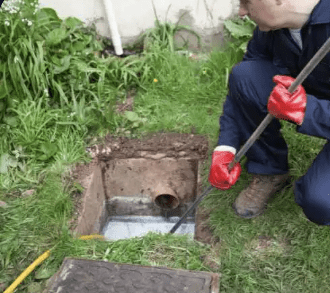
You do not need a surveyor’s report to start a housing disrepair claim, but you will almost certainly need one before the claim is resolved. A surveyor’s report is not a prerequisite for instructing a solicitor or sending a letter of claim, but it is central to how most housing disrepair claims are evidenced and valued, and it is a required part of the Housing Conditions Pre-Action Protocol process that governs how these claims proceed.
Housing disrepair claims turn on two questions: what is wrong with the property, and who is responsible for it. A surveyor’s report answers both. It provides an independent, expert assessment of the nature and cause of the disrepair, the works required to remedy it, and the landlord’s maintenance history in relation to the affected elements. Without that assessment, the evidential picture is incomplete, and the basis for valuing the claim is significantly weaker.
The report is not simply a formality. In many cases it is the central piece of evidence on which the negotiation turns. Where a surveyor confirms that damp is caused by a structural defect rather than condensation from the tenant’s lifestyle, for example, that finding removes one of the most common landlord defences at a stroke. Where a surveyor identifies defects the landlord was not aware of, or documents the extent of damage more fully than the tenant’s own photographs could show, the report changes the evidential landscape of the claim.
The Housing Conditions Pre-Action Protocol, which governs civil housing disrepair claims in England and Wales, requires that an expert inspection be carried out as part of the process before court proceedings are considered. In practice this means that in any claim which follows the protocol properly, a surveyor’s inspection will take place.
The protocol typically provides for the instruction of a single joint expert, meaning a surveyor agreed between both parties and instructed jointly by the tenant’s solicitor and the landlord’s legal representatives. This shared instruction model is designed to ensure the report is independent and to avoid the time and cost of each side commissioning their own competing expert evidence. Both parties are bound by the findings of the single joint expert unless they can demonstrate specific grounds for challenging them.
The sequence in most claims is as follows. The letter of claim is sent. The landlord responds. A surveyor is then agreed and instructed. The inspection takes place and the report is issued. The parties then negotiate based on the report’s findings. This means the report typically arrives partway through the process rather than at the beginning, and the claim can be running for some weeks before the inspection takes place.
A housing conditions surveyor, typically a chartered surveyor with experience in residential disrepair, will visit the property and carry out a physical inspection. The scope of that inspection covers the defects identified in the letter of claim and any related issues apparent on inspection. The surveyor will:
The report produced following the inspection forms the basis of the negotiation on both liability and quantum. Where the surveyor confirms that defects fall within the landlord’s repairing obligations under Section 11 of the Landlord and Tenant Act 1985, and identifies a period during which those defects persisted after the landlord was notified, this directly supports the period over which general damages are calculated.
Most housing disrepair claims are assessed by a housing conditions surveyor. However, some cases require a more specialist expert alongside, or in place of, a general surveyor.
Where the disrepair involves complex structural issues, subsidence, wall tie failure, or suspected defects in a system-built building, a structural engineer may be required in addition to a housing conditions surveyor. A structural engineer has specific expertise in the mechanics of building structures and in specifying remedial works for structural defects that go beyond the scope of a general survey.
Where a claim includes a significant personal injury element, for example where damp or mould has caused a respiratory condition, or where excess cold has worsened a cardiovascular illness, an independent medical expert may be required to produce a report linking the health condition to the housing conditions. This medical report is separate from and complementary to the surveyor’s report: the surveyor establishes the disrepair and its cause, and the medical expert establishes the causal link between the disrepair and the health impact.
Where the claim involves a defective gas installation or a faulty electrical system, a Gas Safe registered engineer or a qualified electrical inspector may be required to assess the specific installation and its compliance with the relevant regulatory standards. In these cases the housing conditions surveyor may still provide an overarching assessment, with the specialist providing technical evidence on the specific installation.
The pre-action protocol anticipates that the parties will agree on the identity of the single joint expert. In practice, solicitors typically propose a surveyor from an agreed list of housing disrepair specialists and seek the landlord’s agreement. Where the landlord does not engage with the process of agreeing an expert, the tenant’s solicitor can proceed to instruct a surveyor unilaterally after a reasonable period, and the court can take non-engagement into account when assessing costs.
Where the parties genuinely cannot agree on a particular named surveyor, it is sometimes possible to agree that each party will nominate a candidate and that the selection will be made by the relevant professional body. This is less common than straightforward agreement on a named expert but provides a mechanism for breaking deadlock.
There is nothing to prevent a tenant from commissioning their own independent survey before instructing a solicitor. Doing so can be useful in certain circumstances: where a tenant wants to understand whether the disrepair is structural before committing to a claim, for example, or where a landlord has disputed the existence of a defect and the tenant wants independent confirmation before proceeding.
However, a privately commissioned survey obtained before the claim begins is not the same as the single joint expert report obtained during the pre-action protocol process. The single joint expert report carries more evidential weight precisely because both parties have agreed on the expert and are bound by the findings. A unilateral survey can be useful supporting material but does not substitute for the protocol expert inspection.
If you have already obtained your own survey before instructing a solicitor, bring it to the initial consultation. A solicitor experienced in housing disrepair will be able to assess its usefulness and advise on how it fits into the claims process.
The single joint expert model is designed to reduce the risk of competing expert evidence, but it does not eliminate the possibility of dispute. A landlord who disagrees with the surveyor’s findings can raise specific written questions to the expert, request clarification on particular points, or, in limited circumstances, seek permission from the court to instruct their own expert. Courts are generally reluctant to allow parties to depart from the single joint expert model in housing disrepair cases without good reason, and the threshold for challenging a surveyor’s findings is relatively high.
Where a landlord raises specific technical challenges to the report, these typically form part of the negotiation rather than triggering a fresh round of expert evidence. A solicitor experienced in housing disrepair will know how to handle landlord challenges to surveyor findings and how to use the protocol framework to manage them effectively.
The quality of the surveyor’s report depends in part on the evidence available at the time of inspection. The following steps, taken before the survey, will help the surveyor carry out the most useful assessment possible.
You can read more about how the full claims process works, including the role of the surveyor’s report in the negotiation stage, on our housing disrepair claims page, and about how compensation is assessed following the report in our housing disrepair compensation guide.
At Satchell Moran Solicitors we act for tenants across England and Wales in housing disrepair claims, managing the full process including the instruction of experienced housing conditions surveyors and specialist experts where required. We hold dual Lexcel accreditation and act on a no win, no fee basis, meaning there is no upfront cost to starting a claim and no solicitor’s fee if the claim is unsuccessful. Get in touch today for a free initial enquiry with no obligation to proceed. You can also read about our no win no fee arrangements in more detail in our no win no fee housing disrepair guide.
Start your claimIn most no win no fee housing disrepair claims, the cost of the surveyor’s report is treated as a disbursement under the conditional fee agreement and is typically recovered from the landlord if the claim succeeds, or covered by after the event insurance if it does not. Your solicitor should explain the specific arrangements for disbursements in your agreement before you commit to the claim.
Once both parties have agreed on the expert and a date for inspection has been confirmed, the inspection itself typically takes a few hours. The surveyor then has a period to prepare and issue the report, which commonly takes two to four weeks depending on the complexity of the disrepair and the surveyor’s workload. Agreeing on the surveyor in the first place can add a further two to four weeks, making the total time from instruction to report receipt typically six to eight weeks in straightforward cases.
Where a landlord does not engage with the process of agreeing a single joint expert within a reasonable time, the tenant’s solicitor can proceed to instruct a surveyor without the landlord’s agreement. The court can take a landlord’s refusal to engage with the protocol process into account when assessing costs at the conclusion of proceedings. Non-engagement does not improve a landlord’s position.
Yes. The single joint expert report obtained during the pre-action protocol process can be used as evidence in court proceedings if the claim does not settle through negotiation. This is one of the reasons why the quality of the expert instructed matters: a thorough and well-reasoned report is a stronger piece of court evidence than a superficial one.
Where the single joint expert’s findings do not support the tenant’s case, for example where the surveyor concludes that the disrepair is within the tenant’s responsibility or that the defect is cosmetic rather than structural, this is a significant setback for the claim. A solicitor will review the report carefully and advise on whether there are grounds to challenge specific findings through written questions to the expert, or whether the report changes the overall assessment of the claim’s prospects. Not all claims succeed, and a robust expert report that does not support the claim is better identified early in the process than at trial.
The surveyor’s inspection typically focuses on the defects identified in the letter of claim, but a thorough surveyor will note any other defects apparent on inspection that are relevant to the landlord’s maintenance obligations. It is useful to ensure that all areas of disrepair are mentioned in the letter of claim so the surveyor is instructed to assess them, rather than discovering additional defects at inspection that were not included in the original claim.